Russian oil was once discounted for being risky. Now, with Middle East transit routes under threat, it may be the safest barrel left in the global market.
On the morning of March 14, 2026, Russian Urals crude settled at $89.12 per barrel. Six weeks earlier, it had traded at $55. A year ago, it was $62.67. What changed was not Russia’s geopolitical rehabilitation, its compliance with any Western demand, or even a fundamental shift in its production capacity. What changed was the Middle East — and with it, the entire architecture of global energy risk.
For three years, the market treated Russian oil as a distressed asset. The logic was straightforward: sanction risk meant a steep discount, and Urals crude had to compensate buyers for the regulatory, legal, and reputational exposure they incurred by purchasing it. That discount peaked at $30 per barrel. Today, it has collapsed to near zero — and the inversion has a name. Russian oil is no longer cheap because it is dangerous. It is expensive because it is, paradoxically, the safest barrel left in the market.
The Infrastructure Autopsy: Arteries, Valves, and What Happens When One Closes
To understand why this inversion is structurally durable — not a one-week aberration — you need to think about the global energy system the way a vascular surgeon thinks about the body. Pipelines and sea lanes are arteries. Chokepoints — the Strait of Hormuz, the Bab el-Mandeb, the Suez Canal — are valves. When a valve closes, pressure doesn’t simply dissipate. It reroutes, concentrates, and finds an alternate path.
The Druzhba Pipeline — the “Friendship Pipeline,” a piece of Cold War infrastructure that ran over 4,000 kilometres from eastern European Russia to Hungary, Slovakia, Poland, the Czech Republic, and Germany — was the original artery. Operational since 1964, it was one of the longest oil pipelines in the world and the backbone of Soviet-era energy integration with Eastern Europe. Since 2022, it has become a geopolitical casualty. Ukrainian forces attacked the pipeline multiple times in 2025, and President Zelensky has publicly refused to repair it. Hungary and Slovakia — landlocked nations with no credible alternative supply — lobbied frantically, even blocking Ukrainian aid packages, to no effect. The Druzhba artery is functionally dead, and two EU member states are now energy islands, held hostage by the transit geography they cannot escape.
But as one artery was severed, another opened — one that cannot be drone-struck, sanctioned, or threatened by a Houthi missile: the Northern Sea Route. Running through the Russian Arctic, the NSR is, in strategic terms, a sovereign Russian hallway. No external actor controls it. No non-Russian military can interdict it. For China, it offers a sea lane that is approximately 30% faster than the Suez Canal and entirely free of the Red Sea threat that has made Houthi attacks on commercial shipping a routine event. For Russia, it turns the Arctic — home to some of its largest oil and LNG fields — from an inaccessible frontier into an exportable advantage.
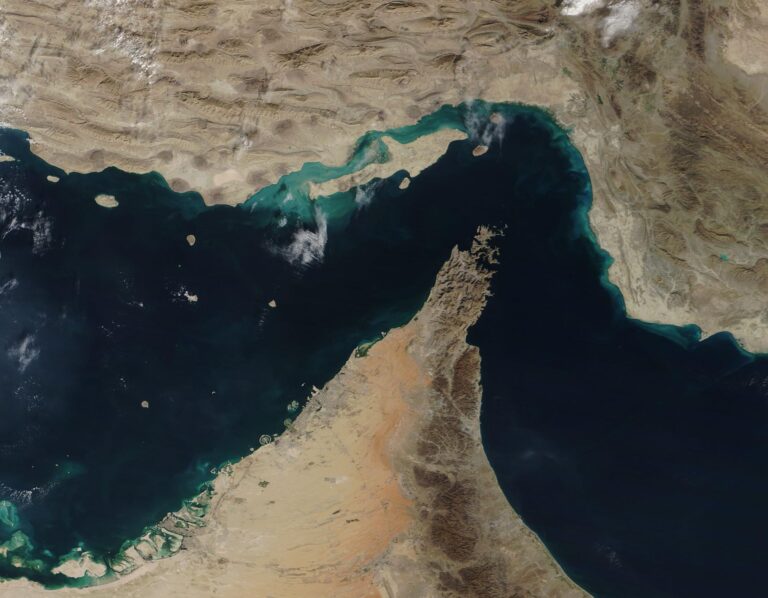
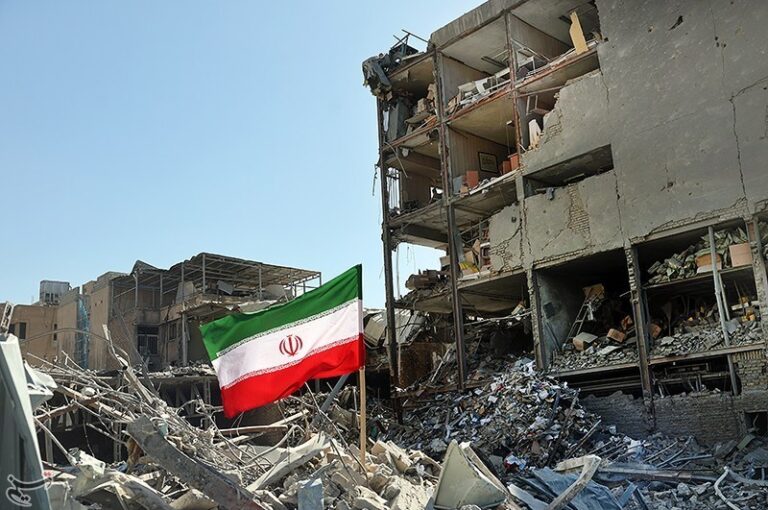
The contrast matters for anyone assessing systemic risk: the Suez Canal and the Strait of Hormuz are valves that can be shut by a single drone strike. The NSR cannot be shut at all. When the US-Israeli military operation against Iran triggered Iran’s threat to close the Hormuz Strait, Brent crude touched $100 per barrel in hours. Seaborne crude is viscerally exposed to physical disruption. The NSR is not. This is why Russia has quietly become what the oil market never expected it to be: the lender of last resort.
Quantifying the Basis Blowout: Why the Discount Disappeared, and What It Means
The collapse of the Urals discount from $30 to $2.30 is the most important single data point in the global energy market today — but the number alone does not explain what is happening. To understand the basis blowout, you have to decompose the discount into its constituent risk premia.
When Urals crude traded at a $30 discount to Brent, that spread embedded two things: a Sanction Risk Premium (the regulatory cost of being caught purchasing embargoed Russian oil), and a Counterparty Risk Premium (the reputational cost of doing business with a state under international censure). Both were non-trivial. Refiners factored them into their purchasing models. Russia had to price its oil to compensate.
Now examine what has changed. Brent crude at $100 per barrel no longer reflects a purely supply-demand equilibrium. It embeds a Physical Destruction Premium — the probability-weighted cost of a tanker being hit by an Iranian missile, a Red Sea drone, or a Houthi interceptor while transiting from the Persian Gulf to an Indian or European refinery. Independent analysts have placed this war premium at $15–25 per barrel. The implication is profound: when you strip out the Physical Destruction Premium, Brent is no longer more expensive than Urals on a risk-adjusted basis. Urals at $89.12 becomes the efficient trade. It carries no transit war risk. It is not routed through Hormuz. On a delivered-safe-to-refinery basis, it may be the cheaper barrel in the market.
This is the logic driving India’s reversal. When Iran announced its Hormuz threat, India purchased 30 million barrels of unsold Russian crude, most of which were already positioned in Asian waters. Indian refiners did not do this out of political solidarity with Moscow. They did it because the arithmetic was undeniable.
But there is a telling asymmetry within the India-China price divergence that reveals something deeper about buyer power. As of February 2026, China is securing Russian Urals at discounts of $9–12 per barrel below Brent. India is getting $2.30. The delta — roughly $9 per barrel — is not random. China has direct pipeline access and NSR shipping capacity. India relies on the Shadow Fleet and long seaborne voyages through contested waters. Russia is, in effect, charging India a loyalty tax: you wavered, you complied with Trump’s sanctions framework, you reduced your purchases when Washington asked. Now you pay a higher price to re-enter. China never left, so China keeps its structural discount. The $9 spread is a geopolitical invoice.
The Shadow Economy: A Forensic Breakdown of the Ghost Fleet
No analysis of Russian oil is complete without understanding the three-tier fleet architecture that has quietly moved hundreds of millions of barrels across the world’s oceans in defiance of every major Western sanctions regime.
The Shadow Fleet is the oldest and best-documented tier. By December 2023, it comprised 1,100–1,400 vessels — mostly tankers approaching the end of their operational lives, purchased by Russian oil companies or opportunistic intermediaries willing to rent capacity at a significant premium. Two thirds of these vessels carry insurers classified as “unknown” by Western maritime databases, meaning they operate entirely outside the Western P&I (Protection & Indemnity) club system. This creates a hidden fiscal time bomb: if a shadow fleet tanker with 2 million barrels of Urals crude ruptures in the Indian Ocean, there is no Western insurer to pay the cleanup costs. That liability sits with the buyer-nation’s coastal authorities. India and China, the two primary destinations for shadow fleet cargo, are implicitly underwriting this environmental risk every time they purchase off-list Russian crude.
The Gray Fleet is a newer and more sophisticated phenomenon, emerging specifically from the post-2022 sanctions environment. These are vessels operated by companies incorporated in offshore jurisdictions after the outbreak of hostilities — entities deliberately structured to appear compliant while obscuring the true chain of ownership and cargo. What makes gray fleet vessels analytically dangerous is that they exist in a legal fog: it is genuinely difficult to determine, from publicly available information, whether any given vessel is sanctioned or not. Windward Intelligence has identified over 1,000 gray fleet vessels globally. A significant subset of these engage in flag hopping — switching registry jurisdictions frequently to reset their sanctions-compliance profile. The practical effect is to make US Treasury’s 30-day enforcement windows largely inoperative. By the time a vessel is flagged for sanction, it has already rehung its flag in a different jurisdiction and is on its next cargo run.
The Dark Fleet is the most operationally aggressive tier. These vessels engage in deliberate AIS disabling — the intentional shutdown of the Automatic Identification System that maritime traffic authorities use to track vessel movements — combined with identity and location spoofing. When a dark fleet tanker goes dark in the Malacca Strait and re-emerges in Chinese territorial waters with an altered vessel ID and a different flag, there is no continuous data trail. Windward has identified approximately 1,300 dark fleet vessels. The combined effect of gray and dark fleet operations is a massive Data Fog: the IEA, the EIA, and every major commodity forecaster cannot know, with any precision, how much Russian crude is actually flowing into the global market. True global inventory levels are structurally unknowable as long as 2,000+ vessels are operating outside transparent data systems. For anyone building a supply model, this remains the single most important source of model risk in the oil market.
The US Waiver Paradox: When a Superpower Funds Its Adversary to Save Its Pump Prices
The clearest signal that the old energy order has ended came not from Moscow or Beijing, but from Washington. When the US announced a 30-day waiver allowing other nations to purchase Russian Urals — shortly after Iran’s Hormuz threat sent gasoline prices spiralling — it did not frame it as a concession. It was presented, in the dry language of Treasury guidance, as a temporary exception in the national interest.
Read it the way any strategist or policymaker should: it is a confession of Energy Defeat. The United States cannot simultaneously prosecute a proxy war in Ukraine, support an Israeli military campaign against Iran, enforce a global Russian oil price cap at $60 per barrel, and maintain domestic fuel prices below a politically acceptable threshold. The 30-day waiver reveals that something had to give — and it was the sanctions architecture. For three years, the US spent significant diplomatic capital constructing the Price Cap Coalition, assembling G7 consensus, and coercing third-party states into compliance. That architecture collapsed in weeks when pump prices threatened to breach a domestic political tripwire.
The implication is structural, not tactical. If the United States is willing to subsidise its adversary’s oil revenue — effectively routing purchasing power to the Kremlin — to suppress domestic inflation, it signals that global supply is materially tighter than official data reflects. The IEA’s stated surplus numbers are a fiction if the world’s largest economy cannot enforce a price cap without triggering an inflationary crisis. There is a floor under oil prices, and it is being maintained by the inelastic demand of buyers who have no alternative. That floor, paradoxically, is now being defended by US policy itself.
Conclusion: The Multipolar Energy Reality
What we are witnessing is not a temporary anomaly produced by Middle East conflict. It reflects a deeper structural shift: the emergence of a multipolar energy market in which the old hierarchy — Western-priced, Western-insured, Western-routed — no longer holds.
Russia, once a pariah on the margins of the global oil trade, has become its indispensable supplier. Its oil cannot be blown up by a drone strike. Its primary export route through the Arctic cannot be interdicted. Its price, stripped of risk premia, is competitive with any alternative on a risk-adjusted basis. And its largest buyers — China and India, together representing the majority of global demand growth — have demonstrated that they will absorb whatever political cost is necessary to maintain access.
At $89.12, Urals crude is not a distressed asset. It is the only liquid market left.
Join the Club
Like this story? You’ll love our monthly newsletter.
Tags: featured