A war that started with missiles and airstrikes is now threatening the arteries of the global economy.
When the war began on 28th February 2026, few expected it to escalate to the level it has reached today. President Donald Trump was confident he could bend Iran’s will and make the leadership surrender — just like he had in Venezuela. The first attack took out Iran’s supreme leader Ayatollah Khamenei, making Trump and Israeli Prime Minister Benjamin Netanyahu confident victory was theirs. Trump was new to the game but Netanyahu had been preparing for this war his entire political career. Ever since Netanyahu entered the Knesset in the early 1990s, he began sounding the alarm on Iran’s budding nuclear program. Perhaps it was Iran’s admirable ability to keep things underground or perhaps it was genuinely difficult to build a nuclear weapon as a nation that had been isolated by the world, but Netanyahu only appeared as a scaremonger, his claims motivated by a desire for power rather than a genuine concern about an enemy nation becoming more powerful.
Iran’s Oil reserves are its weapon
Yet the geopolitical tension surrounding Iran has never been only about nuclear capability. Oil has always sat at the center of the conversation.
Iran has one of the largest oil reserves in the world. As of recent estimates, in 2025, it had 209 billion barrels of crude oil, which amounted to close to 12% of the world’s total oil reserves. Iran’s oil reserves come in 3rd place — right after that of Venezuela and Saudi Arabia. While the US government and more specifically Trump has not said that they are hoping to secure Iran’s oil reserves for their own use, the events that have unfolded throughout this year have placed crude as a key priority for many nations, and most of all for the United States.
The world’s most critical oil chokepoint
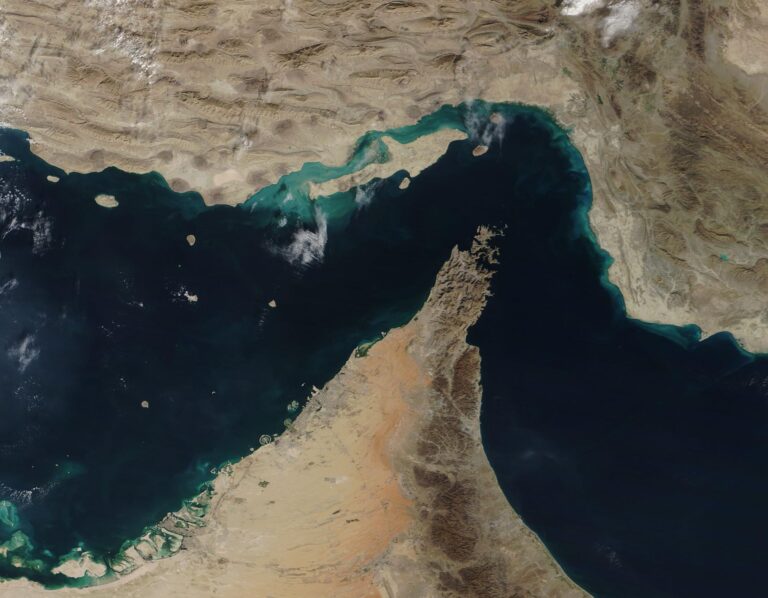
After the war started escalating, Iran warned other nations it would now restrict access to any oil ship that travels on the Strait of Hormuz. For context, the Strait of Hormuz provides passage for the transport of oil and gas from the Middle East to the rest of the world. Roughly 20 million barrels of oil per day move through the Strait of Hormuz under normal conditions. This represents about 20% of global oil consumption and roughly one-fifth of the world’s oil trade. The oil mainly comes from Saudi Arabia, Iraq, Iran, Kuwait, UAE, and Qatar and is shipped mostly to Asia (China, India, Japan, South Korea). In other words, the Strait of Hormuz is the single most important oil chokepoint in the world. If it were fully blocked, about one-fifth of global oil supply would suddenly struggle to reach markets, which is why oil prices react sharply whenever tensions rise in that region. Roughly 35–50% of India’s own crude imports pass through this strait.
Energy infrastructure under fire
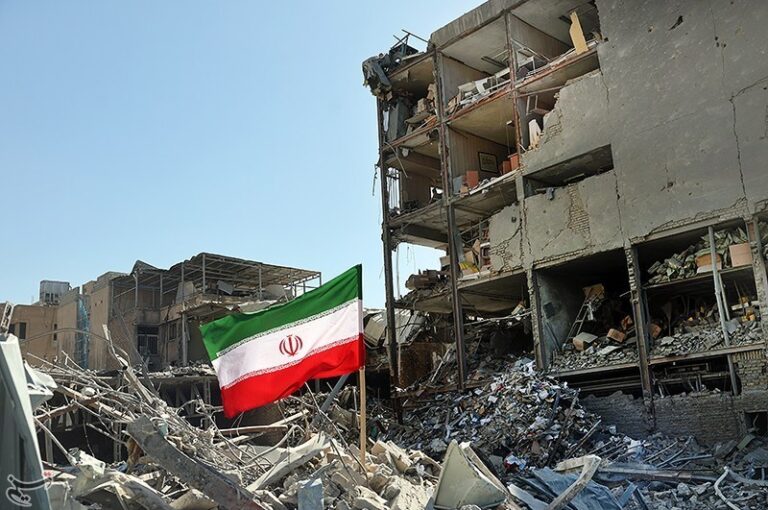
It did not take long for markets to react. Since 28th February of this year, the price of Brent Crude reached $98–$100 per barrel and the price of WTI crude reached $92–$93 per barrel. Brent briefly traded above $100 earlier this week due to the conflict, hitting a high of $119.50 on March 9th before pulling back. Analysts warn it could reach $120–$135 if Hormuz shipping is severely disrupted for weeks. To be clear, the price of crude didn’t reach this level solely because of the passage being blocked. Since the escalation of the U.S.–Israel war with Iran in late February, multiple attacks have targeted oil infrastructure and shipping linked to the global energy system. Joint U.S. and Israeli airstrikes inside Iran struck several fuel and refining facilities, including the Tehran refinery, the Shahran oil depot, the Shahr-e Rey refinery, the Aghdasieh oil storage facility, and an oil depot in Karaj, causing fires and disrupting fuel storage and distribution. In retaliation, Iran expanded attacks beyond infrastructure to maritime energy logistics, targeting commercial ships moving through the Persian Gulf and the Strait of Hormuz. On 11 March 2026, at least three merchant vessels were struck by projectiles in the strait, including the Thai-flagged bulk carrier Mayuree Naree, which caught fire after being hit and had most of its crew rescued while three sailors were reported missing. Two other ships — the Japanese container vessel ONE Majesty and the Marshall Islands-flagged Star Gwyneth — were also damaged in the same wave of attacks. In parallel incidents during the conflict, Iranian forces also struck other tankers and cargo vessels in the Gulf, including attacks involving explosive drone boats and projectiles against oil tankers near Iraq and Oman, contributing to widespread disruption of shipping through the Strait of Hormuz, the key route for roughly one-fifth of global oil trade. These strikes on refineries, oil depots, tankers, and commercial shipping lanes have significantly destabilized regional energy infrastructure and maritime oil transport during the war.
Oil as a weapon in modern conflict
In modern conflicts, oil rarely remains a passive resource. It quickly turns into leverage. By limiting the transport of oil across the Strait of Hormuz, Iran has not only destabilized nations that rely heavily on this route for their fuel needs; it has also created a supply chain shock strong enough to increase the price of oil — which ultimately leads to price increases in almost all walks of life, thus increasing inflation everywhere. The ones who will feel the pain the most ultimately are those countries that were already trying to reign in inflation. For the US, this is a double whammy. It was only recently that inflation stabilised around 2.4%, even as the labor market had been showing intermittent weakness — February 2026 marked the third time in five months that payrolls fell, with 92,000 jobs lost that month alone. But now that oil prices have increased sharply in a short period of time, causing volatility to spike and uncertainty to become the new norm, all walks of life will feel the brunt in their daily lives soon enough.
India’s energy vulnerability comes into focus
The ripple effects are already visible far beyond the battlefield.
Some countries like China have managed to maintain limited oil flow from Iran — Tehran has been allowing some Chinese vessels to transit the Strait, though no formal guarantee exists and volumes remain well below pre-war levels. India, however, is facing a shortage of gas. Eateries have shut down temporarily and the common man is queuing up in lines to get a gas cylinder so that they can cook and feed their families. The Indian government has reassured citizens that fuel and gas are not in shortage and have guaranteed that India can sufficiently meet its fuel demand for 12 to 16 weeks. At the same time it has also invoked the Essential Commodities Act. The Essential Commodities Act allows the Government of India to regulate the production, supply, distribution, and pricing of certain critical goods if it believes there is a risk of shortage, hoarding, or sharp price increases. Under the law, the central government can impose stock limits, restrict hoarding, control prices, regulate storage and movement of goods, and crack down on black-marketing for items considered “essential.” The purpose is to prevent artificial scarcity and protect consumers during crises such as wars, supply disruptions, inflation spikes, or natural disasters, allowing authorities to intervene quickly in commodity markets when normal supply-demand dynamics threaten affordability or availability.
Emergency powers to protect domestic supply
That decision reflects just how exposed countries like India are to disruptions in Gulf shipping. With shipping disruptions and volatile oil prices, the Indian government is concerned that imports of gas and petroleum products could tighten, which could lead to shortages or price spikes domestically. By invoking the Act, the government gained emergency powers to control how fuel is distributed within the country. It has ordered energy companies to prioritize gas supply for essential uses such as LPG production (cooking gas), piped gas for households (PNG), and CNG for public transport, while industrial sectors may receive reduced allocations if supplies tighten. The move is meant to ensure households and critical services continue receiving fuel even if global supply disruptions worsen.
The underlying logic is precautionary: India imports about 85% of its crude oil and a large portion of its LNG, so a conflict affecting Gulf shipping lanes could quickly translate into domestic shortages. Iran itself has decided to release its strategic reserves which will help it tide over any fuel disruption, given just a few days ago Israel attacked Iran’s oil refineries — leading to casualties in the hundreds and black smoke and acidic rain lasting for days.
Conclusion
What began as a military confrontation is now shaping into something much larger: a struggle over the stability of the global energy system. Wars in the modern era rarely remain confined to borders. They move through supply chains, financial markets, shipping routes, and commodity prices. The Strait of Hormuz sits at the center of that network, and every missile fired near it sends ripples through economies thousands of kilometers away.
For countries that depend heavily on imported energy, the conflict is a reminder of how fragile global supply systems can be. A single chokepoint, a handful of attacks on tankers, or a few disrupted refineries are enough to trigger price shocks that affect households everywhere. Cooking gas queues in Indian cities, volatile fuel markets in the United States, and cautious shipping movements across the Gulf are all symptoms of the same underlying vulnerability.
For now, the world watches the Strait of Hormuz. Because as history has repeatedly shown, when energy routes become battlegrounds, the effects rarely stay local for long.
Join the Club
Like this story? You’ll love our monthly newsletter.
Tags: featured