How Mojtaba Khamenei, a man few Iranians had ever seen, became the Islamic Republic’s third Supreme Leader
On the morning of March 8th, in a location the Iranian state declined to identify, eighty-eight clerics — or rather, those among them who could still be reached — concluded eight days of deliberation and named a new Supreme Leader of the Islamic Republic of Iran. The announcement came not from a marble chamber or a crowded seminary hall but from a secure server, delivered through a video feed that flickered and dropped twice before the vote was finally confirmed. The man they chose, Mojtaba Hosseini Khamenei, had spent much of the past three decades as one of the most powerful figures in Iran whom the Iranian public was never permitted to openly discuss.
To understand Mojtaba is to understand the peculiar architecture of power inside the Beit-e Rahbari — the Office of the Supreme Leader — where he functioned for years as something between a chief of staff, an intelligence broker, and a ghost in the machinery. He was the man who decided which petitions ever reached his father’s desk. During the Green Movement of 2009, reformist leaders identified him as one of the figures helping direct the Basij’s crackdown on demonstrators in the streets of Tehran. Over time he built, with a kind of patient discipline, a loyalist network stretching across the Islamic Revolutionary Guard Corps, the intelligence services, and the seminaries of Qom. Yet he remained largely invisible to the population over which he now presides.
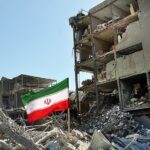
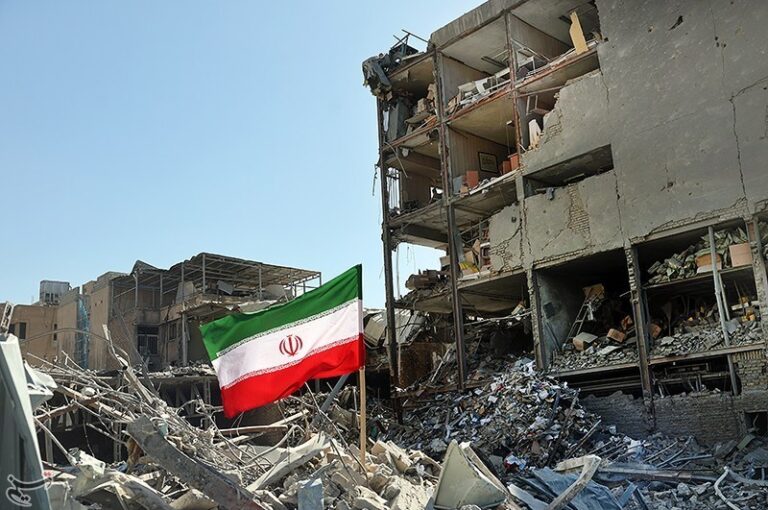
When the US-Israeli strikes of February 28th killed Ayatollah Ali Khamenei, along with the Defense Minister, the IRGC commander, and scores of other senior officials, they did not, as American planners may have hoped, decapitate the regime’s capacity for continuity. If anything, they accelerated it. In the confusion that followed, the son was the institution. The institution, in turn, was the son.
Mojtaba was born in September of 1969, in Mashhad, the city of shrines and pilgrimage, at a moment when his father was still a revolutionary in the making — organizing, agitating, and attracting the steady attention of the Shah’s SAVAK security service. The family home was raided. The elder Khamenei was arrested. According to several accounts, the young Mojtaba witnessed the aftermath. Students of authoritarian politics will note that few environments produce harder convictions than a childhood spent watching the state exercise its power against one’s own family.
After the Revolution, the family relocated to Tehran as Ali Khamenei accumulated titles — Deputy Defense Minister, President, and eventually Supreme Leader. Mojtaba attended the Alavi Religious High School, a well-known feeder institution for the republic’s future elite. His classmates and contemporaries would go on to fill posts across the foreign ministry, the intelligence services, and the clerical establishment. In 1987, at seventeen, he joined the IRGC and experienced the final years of the Iran-Iraq War, serving in the Habib bin Muzahir Battalion — a unit that would, over the decades that followed, evolve into something like an old-boys’ network for hardline security figures. Bonds formed in wartime, particularly in a conflict the Islamic Republic later mythologized as the “Sacred Defense,” carry a particular gravity in Iranian political culture. Mojtaba understood this well. He cultivated those relationships deliberately.
In Qom, where he arrived in 1999 to continue his theological education, the question of Mojtaba’s religious credentials became the subject of a strangely meticulous form of institutional theater. The Iranian Constitution requires the Supreme Leader to be a Mujtahid — a jurist with sufficient standing to exercise independent legal reasoning, something roughly comparable to earned scholarly authority in Western academic traditions. For most of his career Mojtaba held the title of Hojjatoleslam, a mid-level clerical rank that would have rendered him constitutionally ineligible for the position. Then, beginning around 2022, state-affiliated media outlets began quietly referring to him as “Ayatollah.” There was no formal ceremony and no official declaration. The title simply appeared, with the quiet insistence of a memo circulated among subordinates who understood exactly which questions not to ask.
His mentor in Qom was Mohammad-Taqi Mesbah-Yazdi, the ideological patron of Iran’s ultraconservative Paydari Front, a cleric who argued — against much of mainstream Shia jurisprudence — that religious authority could be fused more openly with revolutionary coercion than earlier generations of clerics had preferred to admit. The influence is visible. Mojtaba’s political theology, insofar as it can be inferred from his actions rather than from his largely private writings, resembles less the traditional jurisprudence of the senior marjas in Najaf or even the careful ambiguity cultivated by his father. It resembles something closer to a security doctrine, dressed in theological language.
The Assembly of Experts’ selection of Mojtaba was not, by most accounts inside Iran, a serene exercise in religious deliberation. IRGC commanders either attended or communicated with several members. The sessions themselves were held in undisclosed locations and, for several days, conducted partly online. Some members reportedly threatened to boycott the proceedings. Others, according to Persian-language reporting outside Iran, were given only limited time to present dissenting arguments before the leadership board moved the vote forward. In the end, roughly sixty-nine of the eighty-eight members supported Mojtaba’s appointment.
Several clerics who opposed the decision raised essentially the same objection: that appointing the son of the Supreme Leader as the next Supreme Leader was precisely the kind of dynastic logic the 1979 Revolution had claimed to abolish. In the revolutionary narrative, the Shah’s greatest offense was not merely his brutality but his presumption that power could flow through bloodline rather than through God’s will as interpreted by qualified scholars. The Islamic Republic was meant to be different. Velayat-e Faqih — the guardianship of the Islamic jurist — rested on the idea of earned religious authority, not inherited privilege. To elevate Mojtaba to the position was, as one opposition figure outside Iran put it, to create a “theocratic version of hereditary monarchy.” The phrase carried the kind of sharp irony that political reality sometimes produces.
In London, Dubai, Frankfurt, and Mallorca, the assets are largely invisible. Luxury properties held through offshore shell companies registered in the Isle of Man and Nevis, hotels in Germany, a ski resort in Austria, a shopping center in western Germany — all of it traced by investigative journalists and European financial regulators through a network of intermediaries back to the family of the Supreme Leader. At the center of this structure appears a billionaire businessman named Ali Ansari, widely described as Mojtaba’s primary financial agent. Ayandeh Bank in Tehran, the Iran Mall complex, and a rumored frozen account of 1.6 billion dollars in a British financial institution form the domestic nodes of an empire estimated at roughly three billion dollars. Much of the money moves through what analysts call the “shadow fleet” — oil tankers that transport Iranian crude under flags of convenience, helping finance the IRGC’s foreign operations while sustaining the regime’s liquidity under the pressure of Western sanctions.
None of this resembles the way religious authority is supposed to function. Then again, very little about the Islamic Republic in early 2026 resembles the system it once claimed to be building.
The country Mojtaba now leads is, by nearly every economic measure, in a state of severe distress. Inflation reached 58 percent in early 2026. The rial has collapsed. Close to forty percent of the population now lives below the poverty line. Since the uprising that began in 2025 — triggered initially by the currency’s collapse and expanding into the largest protest movement in the republic’s history — more than three thousand people have been confirmed killed by security forces, with credible estimates running considerably higher. Twenty-four thousand people have been arrested. In large parts of the country, the internet has simply been shut off.
Mojtaba’s own losses in the February strikes were devastating on a personal level. His mother, his wife, a sister, and one of his children were killed when the Khamenei residential compound in Tehran was struck. If the grief has registered in any visible way, it has not been allowed to surface in public. The new Supreme Leader delivered his first address — a short, tightly controlled statement — within days of his appointment. He spoke of resistance, not mourning.
What Mojtaba Khamenei represents, in the end, is less a person than a solution to an institutional problem. The Islamic Republic required someone who already controlled the machinery of the security state, who commanded the loyalty of the IRGC, who could not easily be outmaneuvered by rival clerical factions in Qom, and who would not need years of introduction to understand where the bodies were buried, metaphorically or otherwise. Mojtaba satisfied every one of those requirements. That he also happened to be the son of the previous leader was, from the perspective of the regime’s hardline core, not a liability but an advantage — continuity presented as legitimacy, efficiency presented as succession.
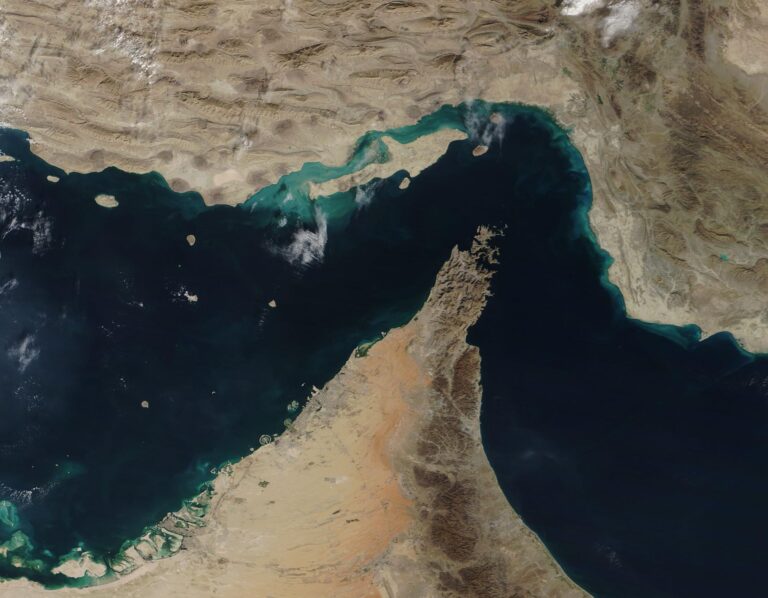
Whether it will hold is the question the coming months will answer. The war with the United States and Israel continues. Iran’s conventional military has been badly degraded. The regime possesses, by current estimates, roughly 460 kilograms of sixty-percent enriched uranium — close enough to weapons-grade that the possibility of nuclear breakout is no longer theoretical. The Strait of Hormuz, through which roughly a fifth of the world’s oil passes, remains effectively closed, and Brent crude has surged accordingly.
The shadow prince is now simply the prince. The country he governs is under siege, from both outside and within, and the theory of government that carried him into power — revolutionary, theocratic, anti-dynastic — has become the first casualty of his rule. In that sense, Mojtaba Khamenei inherits not only a war but a paradox: he stands as the embodiment of everything the Islamic Republic spent forty-seven years insisting it would never become.
Join the Club
Like this story? You’ll love our monthly newsletter.
Tags: featured